
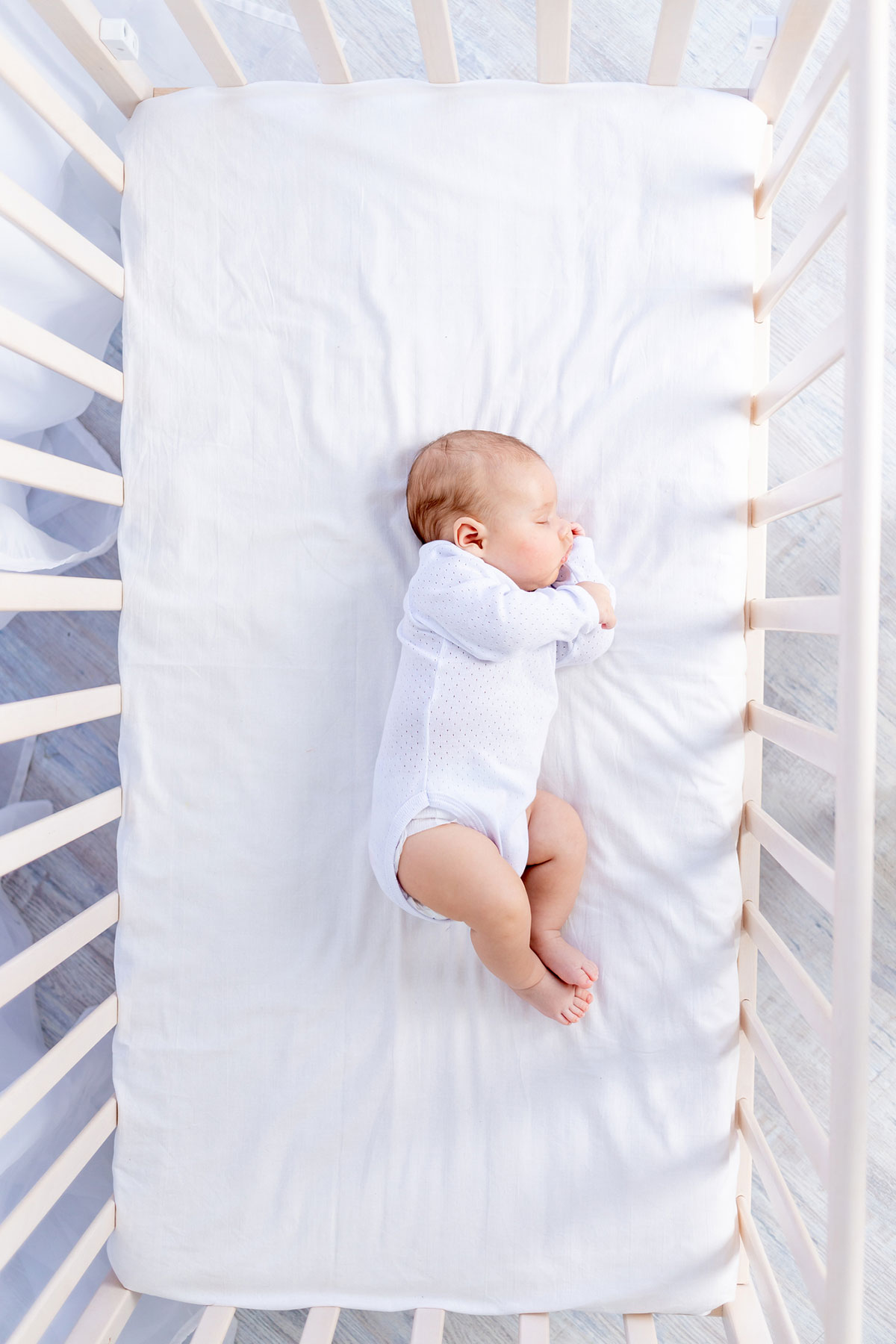
What should a Baby's Bed be like?
Every family places great importance on their baby’s development and health. A healthy sleep is a major contributor to a baby’s development. Babies who sleep soundly tend to have a more positive outlook and their reactions are cheerful and calm. Therefore, parents’ choice of baby crib plays a significant role in the baby’s development.
At what age can babies start sleeping alone in their own beds or rooms?
Once your baby turns two, they no longer need to sleep in a crib or bassinet with bars; they can have a bed without bars and their own room. Parents need to do extra research when choosing this new bed and room, because sleep habits begin to form and develop during childhood. Choosing a bed that supports your baby’s health will allow them to maintain their established sleep routine without disrupting their regular sleep habits.
What are the important points to consider when choosing a mattress?
Many parents choose beds based on the misconception that children can sleep anywhere. However, quality sleep supports a child’s development. Therefore, parents need to pay attention to certain details when choosing a bed for their baby.
These points are:
- Bedroom furniture must be painted with lead-free paint.
- Bed furniture with rounded corners and no sharp protrusions should be preferred.
- Care should be taken to ensure that the furniture does not have cracks or broken parts. Furniture materials that wear out easily should be avoided.
- The bed should be the right size for your child to be comfortable. Avoid choosing a bed that is too small or too large.
- You should make sure that the bed furniture and mattress are not too high off the ground.
- The mattress should have features that allow the child to get a healthy sleep. Orthopedic mattresses will support the child’s spinal structure in this regard.
- You can buy Visco mattresses for children over 3 years old. Using Visco mattresses before this age negatively affects spinal development.
- A heavy mattress should be avoided. Considering that you will need to lift the bed to change the bedding, you should choose a mattress with an appropriate weight.
- Choose mattresses made from breathable materials such as wool, cotton, and latex.
- The mattress must fit snugly inside the bed frame. Any gaps can lead to accidents.
- If there is a gap between the mattress and the bed frame, care should be taken to ensure that this gap is less than two fingers’ width.
- The mattress should not have any protrusions. This will disrupt your child’s developing spinal structure.
- Fabric materials with antibacterial properties should be preferred.
- The materials used to manufacture the mattress should be reviewed. It must be ensured that it is not made with synthetic or carcinogenic materials.
By paying attention to these details, you can choose the most suitable bed for your child.
What are the characteristics of the sheets and duvet covers used?
When choosing bedding for your child’s new bed and room, you should consider certain criteria. In particular, you should opt for sheets and duvet covers with antibacterial properties. These types of fabrics harbor minimal bacteria, reducing your child’s risk of getting sick.
Considering that you’ll need to wash your child’s bedding and sheets frequently, you should choose sets that are easy to clean. In particular, you should ensure that the sets you choose are made from natural materials. Bedding and sheets made from synthetic or carcinogenic materials can pose a significant risk to your child’s health.
Choose from several sheet and duvet cover sets that meet your specifications, and discuss the choice with your child. This will show your child that you trust them and value their opinions.
What points should parents pay attention to during the initial adjustment period?
Your baby can easily adjust to their new, bar-less crib in a separate room with a few precautions. Initially, parents must take some measures in case their child turns over in their sleep. You can place a chair or pillow at the edge of the crib, and remove these supports once your child gets used to sleeping in their bar-less crib.
Sleeping alone might be frightening for your child at first. Therefore, you can stay with them until they fall asleep and do some activities that will help them sleep. You can also try to overcome this fear by leaving a light on dimly.
Your child may feel safer and fall asleep more easily with a certain amount of light in the room. However, you shouldn’t accustom your child to leaving the lights on all night; you should implement this step gradually. Because getting used to this situation could lead to your child developing a phobia of the dark later on.
What should a baby’s room be like?
You should collaborate with your baby when decorating the room where they will sleep alone. By working together on steps such as choosing bedding, sheets, covers, and the room’s color, you show that you value their tastes and opinions.
In the early stages, you can try to help your child overcome their fear of the dark by providing dim lighting in the room with a nightlight or by leaving the hallway lights on. Also, leaving the door to your child’s bedroom slightly ajar will let them know they can easily reach you if they get scared. This will instill a sense of security and allow them to sleep more peacefully.