
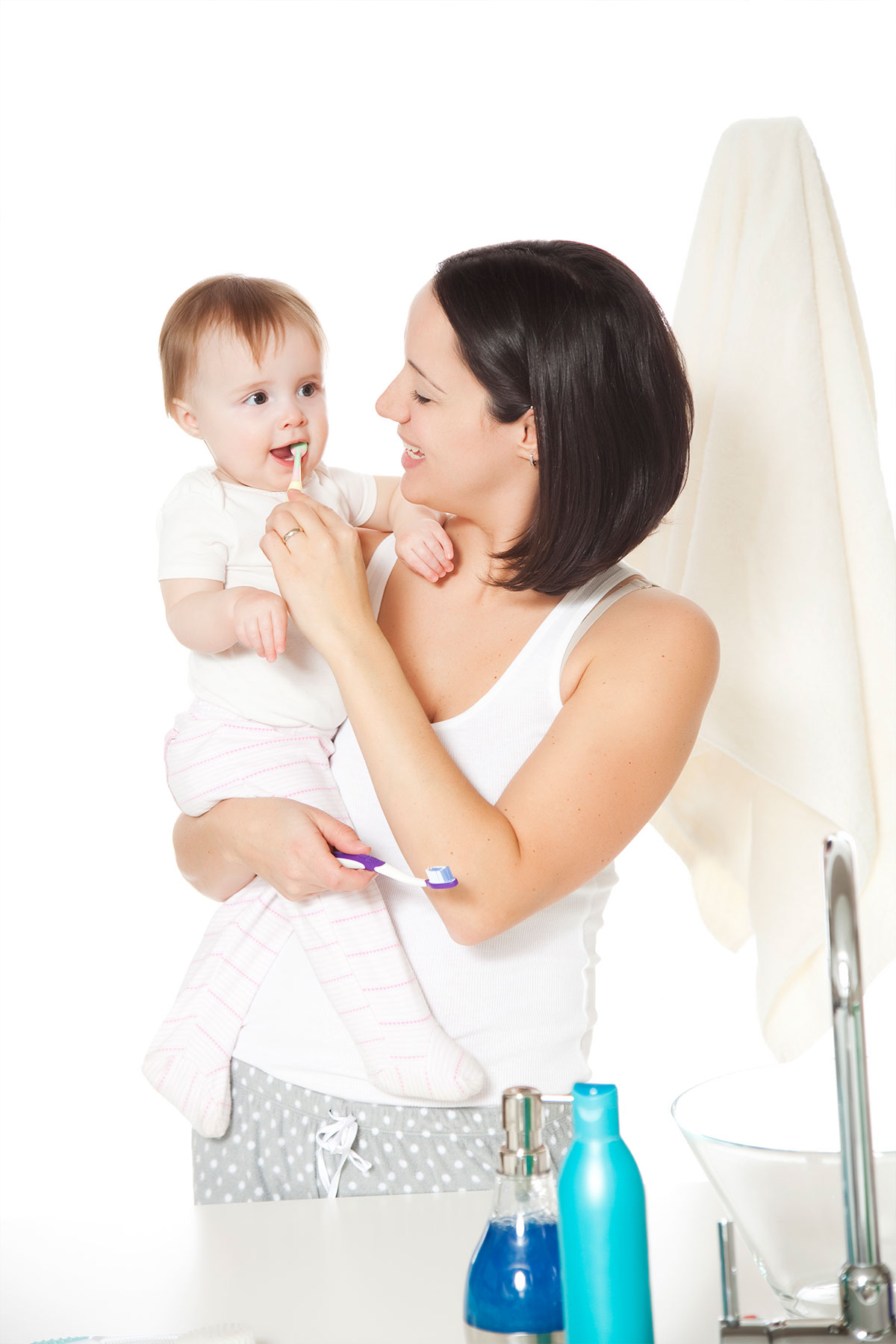
How to Monitor Babies' Dental Health?
Babies’ teeth begin to erupt between 6 and 12 months of age. During this period, you should start monitoring your baby’s oral and dental health. The first tooth to erupt is the right front incisor, located in the lower jaw.
Later, baby teeth will also begin to erupt, and your child will continue teething until approximately 3-3.5 years old. Although teething is quite a painful period for babies, you can make it easier to get through this period by constantly monitoring your baby’s oral and dental health.
When should babies have their first dental check-up?
A child will have 20 baby teeth in a healthy mouth. All baby teeth have roots, and if they need to be extracted, a dentist should be consulted.
These teeth, which erupt according to development, will remain in the mouth until the age of 10-12. Permanent teeth first undergo a specific developmental process within the jawbone. Then, permanent teeth begin to erupt in place of the baby teeth that have fallen out or been extracted.
Your baby should start having dental checkups between the ages of 6 and 12 months, as soon as their first teeth start to emerge. These checkups should be with a pedodontist, a specialist in children’s dentistry. These checkups should be repeated every six months. When taking your baby to the doctor, you should absolutely avoid using phrases that might scare them.
From the time babies’ first teeth begin to erupt, feeding utensils such as spoons and cups should be preferred. Your baby can continue to be bottle-fed until the age of 2, but getting them used to feeding with utensils like spoons and cups will play a big role in the development of their oral and dental health. Additionally, getting them used to chewing on hard things will help strengthen their teeth.
The Effects of Parents’ Dental Health on Baby’s Dental Health
Parents have many responsibilities when it comes to monitoring their baby’s oral and dental health. The most important of these is monitoring your own oral and dental health. Cavity-causing bacteria present in the mouths of mothers or fathers can be passed on to the baby.
For example, checking the temperature of your baby’s formula or bottle with your mouth is a very wrong approach. Doing so can transfer decay-causing bacteria from your mouth to your baby.
At what age should teeth brushing begin?
You should start paying attention to oral hygiene in babies from the moment their first teeth begin to erupt. Between 6 and 8 months of age, you need to clean the chewing surfaces twice a day, in the morning and evening. You can do this using a moistened gauze, muslin cloth, or teething wipe. Cleaning the gums and teeth is extremely important during this period because any buildup on the surface of the teeth or gums contains bacteria. These bacteria secrete acid, which can cause your baby’s teeth to decay.
Children should start brushing their teeth when their back teeth begin to erupt, which is around 2.5-3 years old. At this age, you should choose a toothbrush that is suitable for your child’s oral structure and has soft nylon bristles.
How should babies’ teeth be brushed?
Oral and dental health in babies and children requires great care. Here are the tooth brushing steps you should follow as your child develops:
- To prevent tooth decay in your baby during the first 6-12 months, you should clean their mouth twice a day.
- As a parent, you should take care of your own oral health and brush your teeth regularly.
- If your child’s back teeth are coming in, you should ensure they brush their teeth twice a day for three minutes each time, without toothpaste.
- When your child reaches 3.5-4 years old and develops a spitting reflex, you should instill the habit of brushing their teeth along with using toothpaste.
- When choosing toothpaste, you should opt for special toothpastes that do not contain fluoride.
By paying proper attention to your child’s oral and dental health, you can protect them from potential dental problems.