
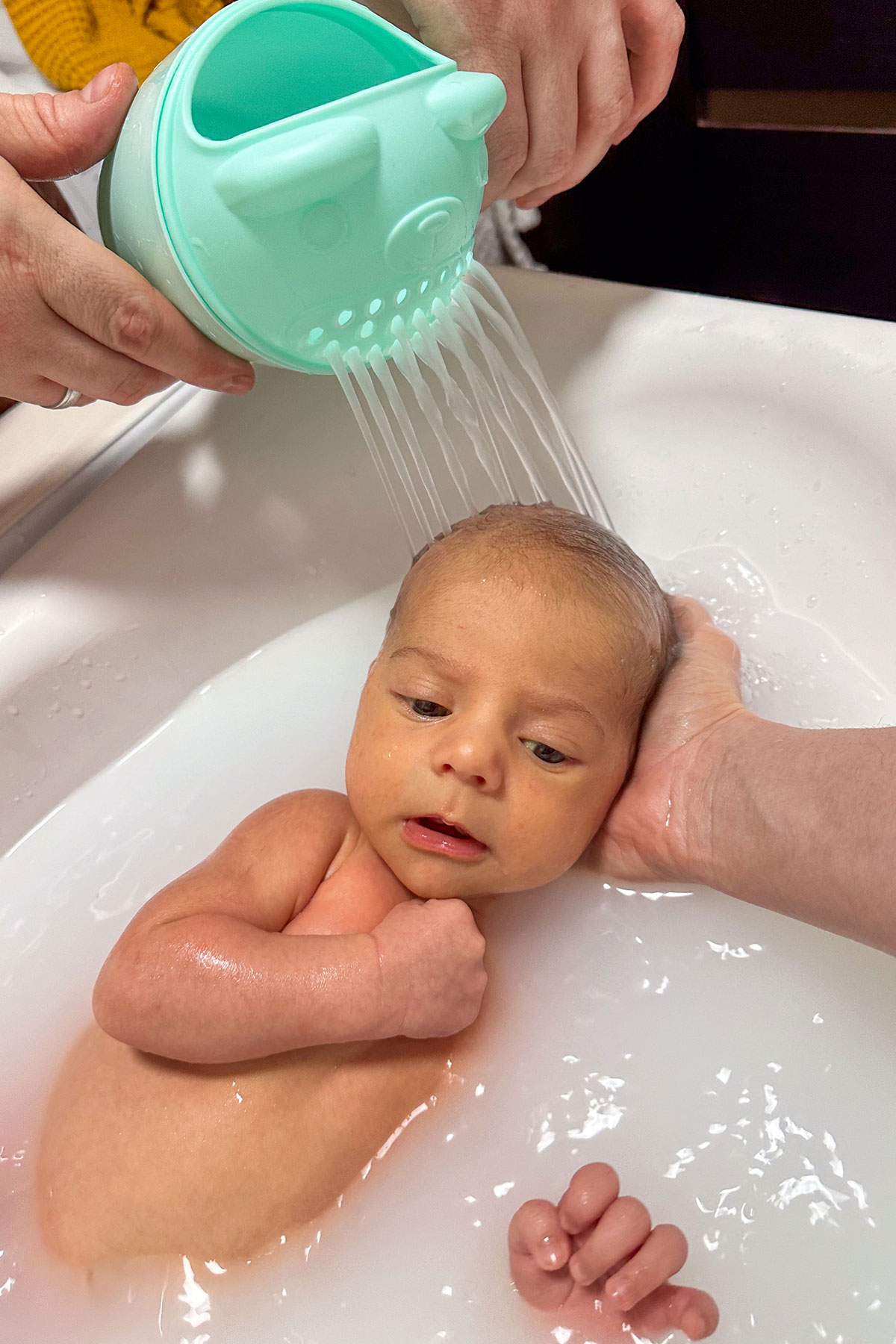
How to Bathe a Newborn baby?
Families can be extremely anxious, excited, and hesitant during their newborn’s first bath. This excitement about giving your baby’s delicate skin its first bath is perfectly normal. By overcoming your hesitations, you can take on your responsibilities towards your baby and easily give them their first bath. However, it’s also helpful to consider some details at this stage. We’ve answered all your questions about giving a newborn their first bath in this article.
How often should a baby be bathed?
Babies are naturally very clean. Their skin is delicate and soft, and as long as they don’t get their clothes dirty, it retains that naturalness and delicacy for a long time. However, this doesn’t mean you shouldn’t bathe them. By frequently cleaning your baby’s body, you can also protect them from illnesses.
You shouldn’t bathe your newborn more than three times a week in the early days. You can clean certain creases of their body daily using a warm, damp cloth or sponge. There’s no need to soap the cloth or sponge; just keeping it damp is sufficient. Gently wipe the creases of your baby’s neck, cheeks, legs, and stomach.
When you bathe your baby for the first time, you should be careful about choosing the sponge you use. Babies have very delicate skin, and you should avoid using bath products that will irritate it. To prevent this irritation, you should also avoid bathing your baby more than 3 times a week. Bathing a baby more than 3 times a week will make their skin more sensitive and prone to irritation.
What should the water temperature be when bathing a baby?
The ideal bathwater temperature for a baby is between 35 and 37 degrees Celsius. The simplest way to check the water temperature is to touch the water with your elbow to gauge the temperature. Some mothers prefer to use special thermometers for this purpose. You can also use this method to determine if the water temperature is at the desired level.
The temperature of a baby’s bath should be at an ideal level for the baby’s comfort. The overall temperature of the bathroom or room where the baby is bathed also affects this. A general room temperature of 21-24 degrees Celsius will provide an ideal environment for bathing your baby. Additionally, placing a thick mat on the floor will make it easier to move around while bathing your baby.
What supplies are needed when bathing a baby?
Before you begin bathing your baby, you should prepare the bath supplies. With the water at the ideal temperature and all necessary materials readily available, you can ensure a relaxing and enjoyable bath for your baby.
You should use a soft sponge or cloth. Choose a material that will not harm or irritate your baby’s skin.
You can keep two baby towels on hand. This way, you won’t have to search for a spare if the first one gets dirty or wet.
You can keep a diaper handy in case your baby needs to use the toilet during bath time. Having one readily available in case of an emergency will also help prevent the bathwater from getting dirty.
What precautions should I take when bathing my baby?
There are some important details to consider when bathing your baby. Let’s take a look at them:
- You should avoid using soap when washing your baby’s skin during the first month.
- You should maintain a calm and positive attitude while bathing your baby.
- Gently wipe away any dry or irritated areas of your baby’s skin after bathing.
- After a sponge bath, be sure to keep your baby’s umbilical cord area dry. Consult a pediatrician if swelling or redness occurs.
- You shouldn’t immerse your baby in water until the area around the umbilical cord has healed.
- Start bathing your baby after your doctor gives you the green light.
- Do not bathe your newborn baby more than 3 times a week.
- Exercise caution when using products like baby powder or baby lotion. If these products cause an allergic reaction on your baby’s skin, consult your doctor.
By taking all these details into account, you can ensure that bath time for your baby becomes an enjoyable and relaxing routine.