
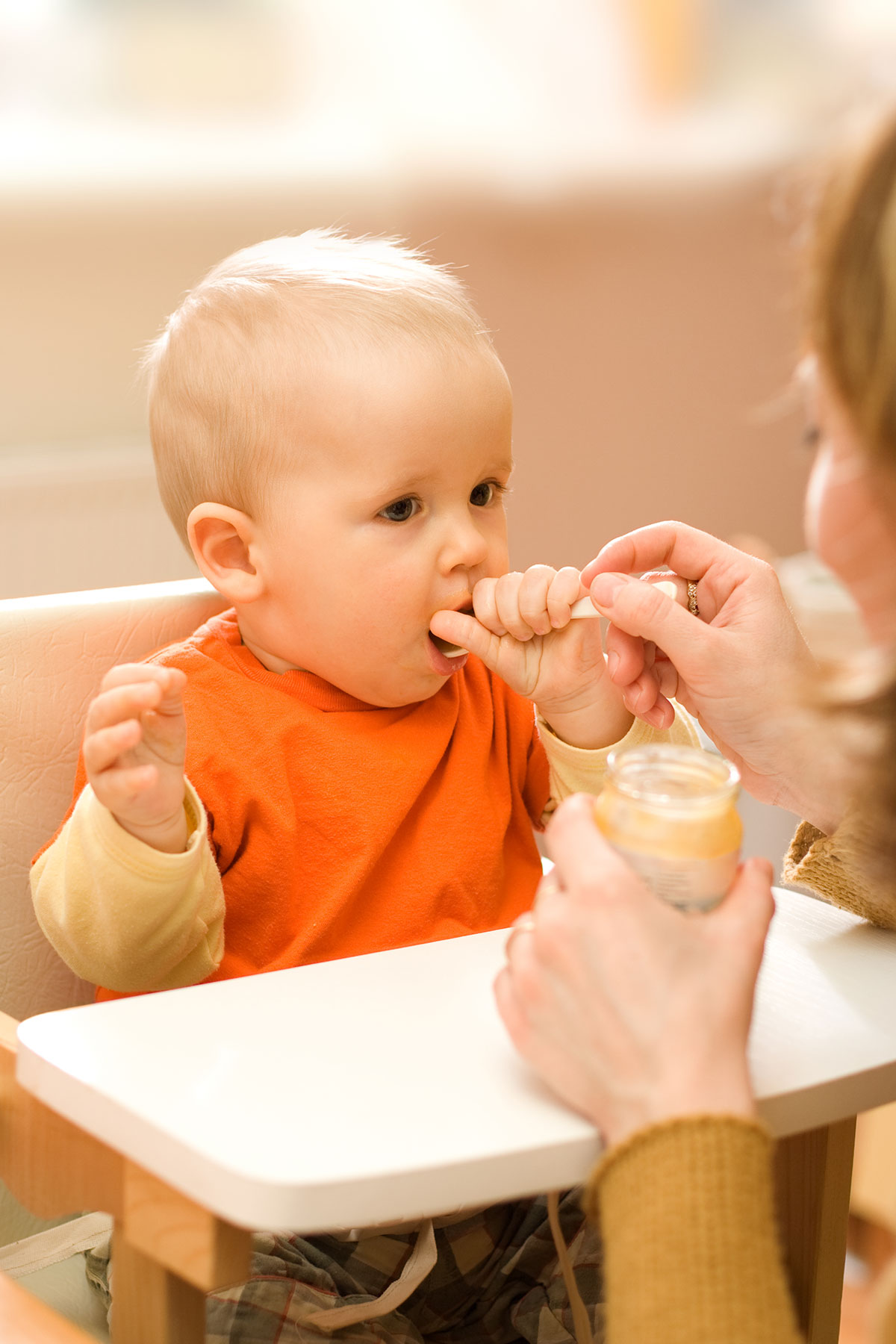
Guide to Introducing Complementary Foods
Nutrition is a cornerstone of physical and mental growth in infants. For the first six months of life, breast milk is the ideal, natural, and most nutritious food for babies. Breast milk contains all the vitamins, minerals, proteins, and components that support the baby’s immune system. However, breast milk meets 70% of the energy requirements between 6-8 months , 50% between 9-12 months , and 40% between 12-24 months . From the 6th month onwards, babies’ energy and nutrient needs increase; therefore, complementary foods are introduced. This period is called the ” Complementary Feeding Period “.
Complementary feeding is the process of introducing new foods to a breastfed baby according to their age and developmental milestones, ensuring a balanced and sufficient variety of foods, and preparing the baby to become self-feeding. This period is characterized by rapid growth, increased nutritional needs, accelerated brain development, and improved gut microbiota. In addition to these changes and developments, taste preferences and eating behaviors also form.
6-Month Complementary Feeding Period
Feeding a 6-month-old baby is a period when the baby is introduced to new tastes and begins to explore their surroundings and food with curiosity. The goal at this stage is not to fill the baby with complementary foods, but rather to initially introduce them to different tastes and textures, to determine if they are developing food allergies, and to gradually support the development of their chewing functions.
During the introduction of complementary foods, breast milk should still be the primary source of nutrition. It is recommended to start with easily digestible, low-allergy risk, and pureed foods. Pureed foods can be continued until the baby develops chewing skills and the tongue thrust reflex disappears ( 7-8 months ); after that, the consistency should be gradually increased to introduce foods with a more textured consistency.
The first foods to be introduced should be fruits and vegetables. The following foods can be introduced at 6 months:
- Vegetable purees (such as carrots, zucchini, potatoes, pumpkin)
- Yogurt
- Fruit purees (such as apple, pear, banana, apricot)
In the past, food tastings during the introduction of complementary foods were done using the ” 3-day rule ” due to the risk of allergies. However, recent studies indicate that allowing a baby to taste the same food for three days delays their introduction to different foods and reduces food variety. Therefore, this system has been abandoned; however, the 3-day rule should still be applied for allergenic foods.
Dairy products, yogurt, peanuts, walnuts, almonds, eggs, tomatoes, soy, seafood, and tahini, which are allergenic foods, should be introduced individually for 2-3 days and monitored for possible allergic reactions ( rash, redness, diarrhea, etc. ).
In the early stages ( 6-7 months ), about a teaspoon of lamb can be added to vegetable purees at each meal. While meat or bone broth adds flavor, its protein value is not as high as the meat itself. Therefore, only the meat itself is recommended during the complementary feeding period; bone broth or cooking broth is not recommended.
Some babies may experience constipation when they start eating solid foods. To prevent this, you can opt for vegetable puree with 1 teaspoon of olive oil . Additionally, you should start giving them small amounts of water throughout the day. Begin with 50-100 ml and gradually increase to 200-250 ml over the next few months.
7-8 Month Complementary Feeding Period
By the time your baby reaches 7 months, they are ready to try more diverse foods. This is a period when taste variety increases and chewing reflexes begin to develop. Instead of single-vegetable purees, you can now prepare mixed vegetable purees. In the 8th month, your baby’s chewing ability and hand-eye coordination further develop. Therefore, you can transition to foods with small pieces .
Examples of foods:
- crushed lentil soup
- small pieces of meatballs
- Steamed vegetable pieces
- Small fruit slices
9-10 Month Complementary Feeding Period
Feeding a 9-month-old baby is a period when the baby gradually begins to participate in family meals. During this time, the baby starts to imitate those around them and wants to hold their own spoon. Therefore, feeding should also be seen as a learning process.
Foods that are frequently preferred during this period include:
- Vegetable dishes with minced meat
- Tarhana soup
- Boiled pasta
- Yogurt
- Lentil soup
You can also offer foods suitable for your baby to feed themselves: boiled broccoli, carrots, sliced soft fruit, small pieces of meatballs , etc. This helps support their motor skills and self-confidence.
Ten-month-old babies can now easily consume many foods. It’s possible to create breakfast meals at this age:
- Boiled eggs
- unsalted cheese
- Whole wheat bread
- Vegetables mashed in olive oil or avocado
- Homemade yogurt
Although complementary foods now make up the majority of your baby’s daily diet at 10 months, breast milk or formula should still be your baby’s primary source of nutrition.
During this period, consuming fiber-rich foods ( pumpkin, pear, apricot, broccoli ) and plenty of fluids helps prevent constipation. Between 10-12 months , the complementary feeding period progresses by combining previously tried foods and increasing variety.
Things to Consider During the Complementary Feeding Period
Introducing complementary foods requires patience and care. Every baby develops at a different pace; therefore, observe your own baby’s needs instead of following someone else’s schedule. The goal of starting complementary foods is not simply to fill the baby up, but to familiarize them with different flavors, develop chewing and swallowing coordination, and to monitor for allergens.
Key points to consider:
- Breastfeeding should be the only source of nutrition for the first 6 months; even during the introduction of complementary foods, breast milk remains the primary source of nutrition (formula if breast milk is insufficient).
- Complementary foods should not be introduced earlier than 4 months or later than 6 months .
- Each new food should be tasted individually and in small quantities.
- Sugar, salt, and honey should absolutely not be given to children under one year old.
- Ideally, meat should be added to vegetable dishes from an early stage of development.
- Babies:
- At 6 months, it has a pureed consistency.
- At 7 months, with foods that have a lumpy texture,
- At 8 months, finger foods can be introduced (pasta, boiled potatoes, meatballs, cheese),
- At 9 months, with foods cut into small pieces,
- At 12 months, the baby should be fed with foods found at the family dinner table.
- Packaged foods, ready-made meals, and products containing additives should be avoided.
- It’s normal for a baby to refuse food; it’s recommended to try foods that are initially rejected repeatedly, as it may take 8-10 attempts for a baby to get used to a new taste .
- After testing each ingredient individually, you can move on to mixing them.
- Foods should be presented in a variety of tastes, textures, colors, and types.
- Food should not be given as a reward or punishment.
- Meals should be short, regular, and made into an enjoyable routine.
- Foods should be prepared under hygienic conditions and stored in glass or stainless steel containers. If additional food items have not been stored refrigerated, they should be consumed within two hours of preparation .
- Babies should definitely be seated at the family dinner table starting from the 9th month .
- Children should be given sufficient time for meals, but this time should not exceed half an hour .
Feeding your baby during the complementary feeding process is a natural journey that requires patience, observation, and love. Every baby’s development is unique; therefore, you need to tailor the feeding plan to your baby’s appetite, weight, and your doctor’s recommendations.
“This article has been prepared with expert opinion and is for informational purposes only. It has been reviewed and approved by Pediatrician Dr. Burcu Kesmez Evirgen.”