
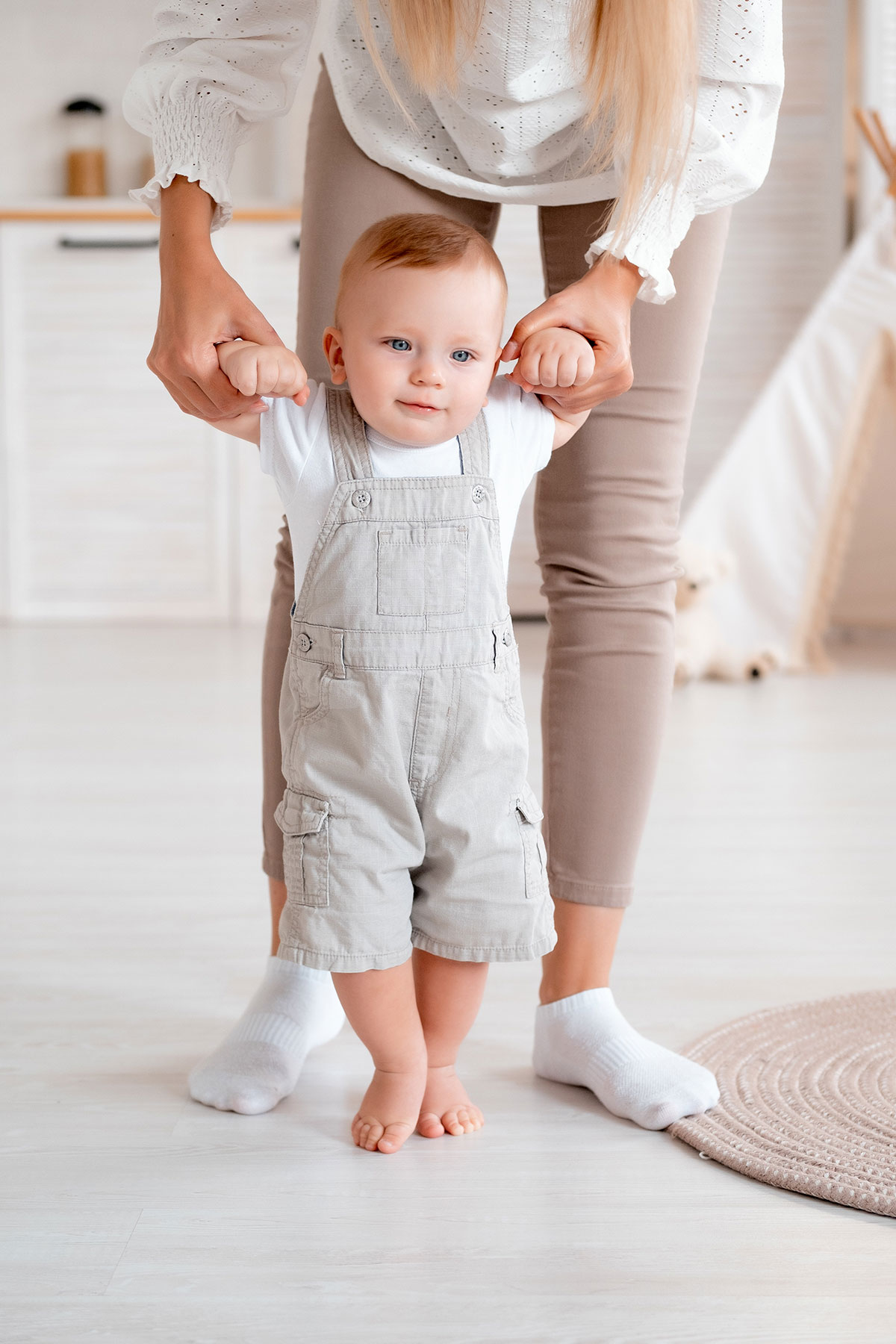
When do Babies Start Walking?
For parents, their baby’s first steps are extremely important. Parents who don’t want to miss this moment count down the days until their baby takes their first steps. A baby’s development is possible by completing certain stages.
However, showing your baby attention and affection is also very important during this period. Playing with them will keep their muscles constantly moving and accelerate their development. This way, your baby may start taking their first steps even earlier than you expect.
How do babies learn to walk?
Different factors play a role in each baby’s development. Therefore, it would be wrong to set a specific timeframe for when babies start walking. For example, while most babies take their first steps between 9-12 months, this time can shift to 14-18 months depending on your baby’s developmental stage. Although this waiting period can be stressful for every parent, your baby may give some signals that they will start walking even before taking their first steps.
A baby’s transition to walking depends on the progression of their development. Since a newborn’s legs aren’t yet developed enough to support them, babies must first learn to sit up unsupported.
Babies who feel the need to rest their feet on something are gradually learning the concept of balance along with this need. This reflex movement can only be observed in the first few months after birth.
A 6-month-old baby will start moving their feet more frequently to develop balance. This movement is up and down. For example, bouncing your baby on their feet in your arms will help develop their sense of balance. It will also make bending their knees easier when they start walking.
The Stages of Babies’ Transition to Walking
Before a baby starts walking, they will first roll over and move their legs. This will be followed by sitting without support and crawling. After crawling, your baby will begin to try to stand up by holding onto something.
Through the act of walking while holding on, babies begin to develop the ability to bend their knees and maintain balance. As mentioned, if you start teaching your baby to bend their knees before they start walking, they will have less difficulty at this stage.
Once your baby has practiced standing up by holding on, walking, and sitting, they will move on to the first steps stage. At this stage, driven by a need to explore, babies will begin to take more frequent and regular steps. Initially, babies may take unsteady and shaky steps, and sometimes even stumble and fall.
However, as your baby approaches 15 months, their steps will begin to become more steady and regular. After this point, your baby will likely prefer to walk to many places they want to go.
What are the reasons that delay walking?
Babies generally start taking their first steps around 12 months. However, this process can sometimes extend to 15-18 months. The main reason for this is that every baby develops at a different level.
Other physiological and psychological reasons include:
- An imbalance in your baby’s height and weight ratio,
- Not getting enough movement for your baby’s muscle and bone development,
- Being overly protective as a parent during your baby’s walking phase,
- Your baby falling while trying to walk and therefore being afraid to walk,
- It means your baby prefers crawling to walking.
Giving your baby time and affection is crucial for them to learn to walk. If you encourage them to walk, you may soon see them taking their first steps.
How can I help my baby learn to walk?
There are many things you can do as a parent to help your baby learn to walk. You can have your baby do exercises, show them how to bend their knees, or teach them to sit without support.
If your baby is hesitant to take their first steps even when standing up with support, you can help them by holding their hands. You can also purchase baby walking aids, such as walkers, to speed up their walking development. This will make it easier for babies who are afraid to walk without support to learn to walk.